


Timing a roof replacement in New England is not just a scheduling detail: it is a decision that affects how well your shingles seal, how long the job takes, and whether you beat the next nor'easter. Between freeze-thaw cycles, ice dams, and the humid heat of July, our region asks more of a roof than almost anywhere in the country. If you are wondering about the best time to replace a roof here in MetroWest Massachusetts, this guide walks through each season honestly: what works, what fights you, and how to plan so your new roof goes on right the first time.
Why Season Matters More in New England
Asphalt shingles: the most common roofing material on homes in Concord, Acton, Sudbury, and the surrounding towns, rely on a heat-activated adhesive strip to bond each course together. That seal is what keeps shingles down in high wind and prevents wind-driven rain from creeping underneath. The catch is that the sealant needs warmth and sunlight to activate, typically in the range of 40–50°F and above. New England's swings from mild autumn afternoons to brittle single-digit mornings mean the calendar has a direct effect on installation quality.
On top of temperature, our weather adds obstacles that milder climates rarely deal with: heavy snow loads, ice dams along eaves, and the constant freeze-thaw expansion that works fasteners loose over time. Choosing the right window lets crews work efficiently and gives materials the conditions they were engineered for.
Fall: The Best Time to Replace a Roof in New England
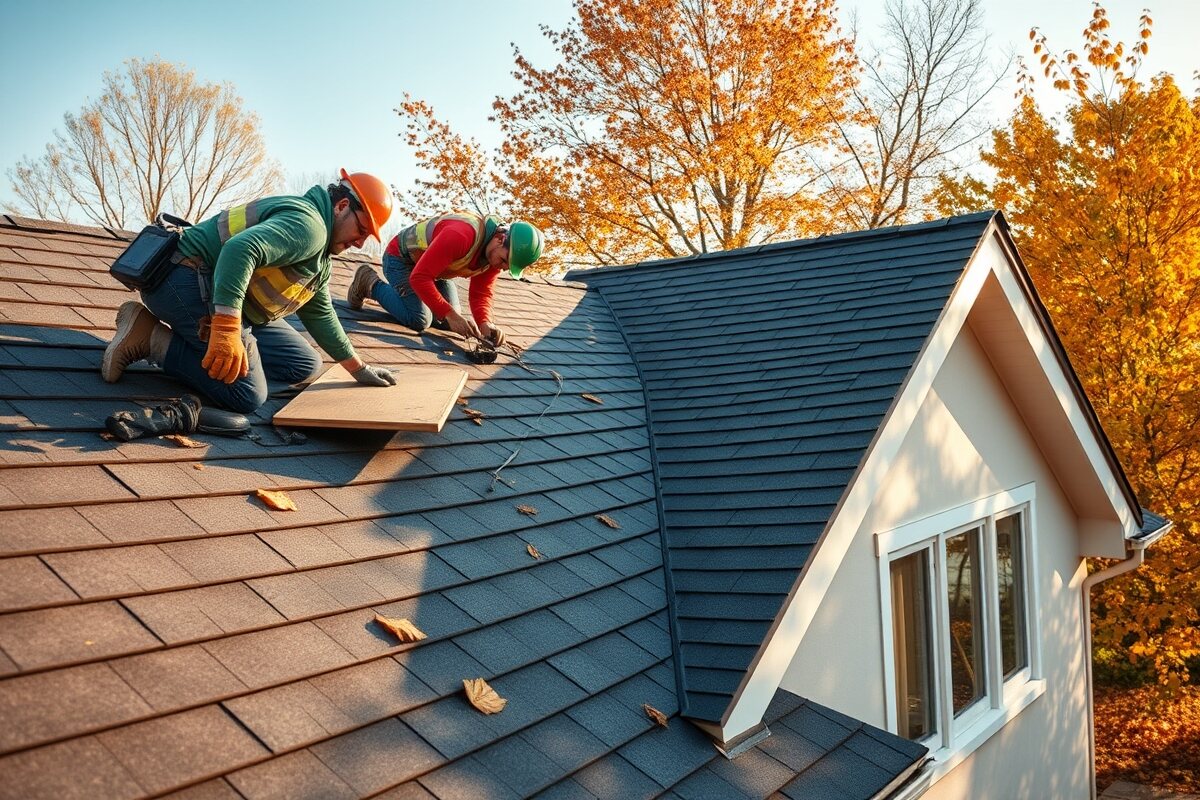
For most planned replacements, fall (September through November) is the sweet spot. Daytime temperatures are mild and stable, which lets asphalt shingles seal and adhere properly, and the cooler air keeps crews comfortable and productive. Just as important, finishing in the fall means your home is buttoned up before winter storms, snow load, and ice dams arrive.
The one drawback is demand. Every homeowner in the region has the same idea, so fall books up fast. The practical move is to schedule a fall replacement over the summer so you lock in a slot before the calendar fills.
Late Spring and Summer: Reliable, but Peak-Busy
Late spring through summer is a solid, dependable window. Warm temperatures activate the sealant readily and long daylight hours give crews plenty of working time. This is a great option if fall slots are already gone or you want to pair your roof with other exterior work.
There are two things to weigh. First, this is peak season, so contractors are busy and lead times stretch. Second, very hot days can be a problem: shingles soften in direct summer sun, which makes them easy to scuff and can slow a careful crew that is working to avoid marring the surface. Early-morning starts help beat the worst of the heat.
Winter: The Hardest Season for Planned Work
Winter is the toughest time to replace a roof in New England, and for planned projects we generally steer homeowners toward other seasons. Cold makes asphalt shingles brittle and prone to cracking during handling and nailing. The adhesive sealant strips will not activate on their own in freezing temperatures, so shingles may not bond until a warm, sunny stretch arrives, sometimes months later. Snow and ice on the roof deck cause delays and safety hazards, and the shorter days mean a job can take roughly twice as long as it would in the fall.
That said, roofs do not always wait for good weather. When there is an active leak or storm damage, replacement or repair should happen right away regardless of season.
A roof emergency (an active leak or fresh storm damage) should never wait for the "right" season. The cost of water intrusion over a New England winter almost always outweighs the convenience of a warm-weather install.
For those situations, we install year-round using cold-weather techniques: hand-sealing each shingle with roofing cement so the bond does not depend on solar heat, keeping materials warm until the moment they go up, and clearing the deck properly before work begins. These methods let us protect your home safely in January when waiting is not an option.
Early Spring: The Time to Assess Winter Damage
Early spring is less about full replacements and more about inspection and repair. Once the snow melts, it is the ideal moment to assess what winter did: ice dam damage along the eaves, lifted or cracked shingles, and clogged or bent gutters. A spring inspection often catches problems while they are still small and gives you time to plan a fall replacement if the roof is nearing the end of its life.
Off-peak scheduling is a hidden advantage here. Late winter into early spring tends to be quieter for contractors, which can mean more flexibility on dates and a faster turnaround for repairs and estimates.
Season-by-Season Comparison
Here is a quick reference for how each season stacks up for roof work in our climate:
| Season | Pros | Cons | Best For |
|---|---|---|---|
| Fall (Sep–Nov) | Mild, stable temps; shingles seal well; beats winter | High demand; books up early | Planned full replacements |
| Late Spring–Summer | Warm; sealant activates fast; long daylight | Peak-busy; hot days soften shingles | Reliable warm-weather installs |
| Early Spring | Reveals winter damage; scheduling flexibility | Wet, unpredictable weather | Inspections & repairs |
| Winter | Available for emergencies year-round | Brittle shingles; poor sealing; delays; slower | Emergency-only work |
How to Plan Your Roof Replacement
A little foresight goes a long way in a climate like ours. A few practical guidelines:
- Book fall over the summer. The best slots go early, so reserve your autumn install months ahead.
- Watch for warning signs. If you are seeing granules in the gutter, curling shingles, or daylight in the attic, review the signs you need a new roof before deciding on timing.
- Budget with real numbers. Our 2026 roof replacement cost guide for MetroWest helps you plan the investment alongside the schedule.
- Don't wait on emergencies. If you have a leak or wind damage, treat it as urgent no matter the month.
- Use the off-season for prep. Winter and early spring are ideal for inspections, estimates, and locking in your project.
Whatever the season, our approach starts the same way: a thorough inspection followed by a free written estimate, so you know exactly what your roof needs and when it makes sense to do the work. Explore our roofing services or see the towns we serve across MetroWest.
Frequently Asked Questions
What is the single best month to replace a roof in New England?
There is no perfect month, but the fall window (roughly late September through October) hits the ideal balance of mild, stable temperatures and time to finish before winter. October is often the standout, weather permitting.
Can you replace a roof in winter in Massachusetts?
Yes, but it is reserved for emergencies. We install year-round using cold-weather techniques such as hand-sealing shingles and keeping materials warm. Planned replacements are still better scheduled for fall or warm weather so the shingles seal naturally and the job moves faster.
Do shingles really not seal in cold weather?
Correct. The adhesive strips on asphalt shingles need roughly 40–50°F and sunlight to activate. In freezing temperatures they may not bond until a warm stretch arrives, which is why we hand-seal during cold-weather emergency work rather than relying on the sun.
How far ahead should I schedule a fall roof replacement?
Plan to book over the summer. Fall is the busiest planned-replacement season in the region, so reserving your slot a few months out gives you the best chance of getting the dates you want.
When should I inspect my roof for winter damage?
Early spring, once the snow has melted, is the best time to check for ice dam damage and the effects of storm and wind damage. Catching issues early keeps small problems from becoming full replacements.
Ready to plan your project or think you may have winter damage? Book your free inspection and we'll help you reserve the right slot for the season ahead.

