


Your roof is the single most important barrier between your family and a New England winter, yet it rarely gets a second thought until water is dripping onto the kitchen floor. The good news is that a roof almost always warns you before it fails. Knowing the signs you need a new roof lets you plan the work on your terms rather than scrambling during a February nor'easter. In this guide, the team at Black Ladder Group walks you through 11 clear warning signs, explains when a targeted repair is the smarter choice, and shares what freeze-thaw cycles and ice dams do to MetroWest Massachusetts roofs.
Why New England Roofs Age Faster
Before we get to the checklist, it helps to understand the forces working against your roof here in Concord, Acton, Sudbury, and the surrounding towns. New England throws a punishing mix at asphalt shingles: repeated freeze-thaw cycles that pry apart tiny cracks, ice dams that force meltwater backward under the shingles, nor'easter winds that lift and tear tabs, and heavy tree canopy that drops debris and shades the roof so moss never fully dries out. Every sign below shows up sooner and progresses faster in our climate than it would in a milder one, which is why an annual look matters so much.
The 11 Signs You Need a New Roof
No single item on this list automatically means replacement. Read them together: the more boxes you check, and the more slopes affected, the closer you are to a full re-roof rather than a patch.
1. Age: 20+ Years and Counting
A typical asphalt shingle roof lasts roughly 15 to 30 years depending on the shingle grade, ventilation, and how brutal the winters have been. If your roof is 20 years or older, it is time to start planning even if it still looks acceptable from the ground. Age is the context for everything else on this list.
2. Curling, Cupping, or Clawing Shingles
Healthy shingles lie flat. When edges turn up (cupping) or the center rises (clawing), the asphalt has dried out and lost its flexibility. Curled shingles no longer seal against wind and water, and they are one of the most reliable indicators that a roof is entering the back half of its life.
3. Missing or Blown-Off Shingles
A few shingles torn off by a single storm can be replaced. But if you are losing shingles repeatedly, or find bare patches after every wind event, the adhesive strips have failed across the field of the roof. Learn more about missing shingles and what causes them.
4. Granules in the Gutters
Those sand-like granules are the protective mineral layer that shields the asphalt from UV rays. Finding piles of them in your gutters or at the base of downspouts means your shingles are shedding their armor. Some granule loss is normal on a new roof; heavy, ongoing loss on an older roof signals the shingles are wearing out.
5. Bald or Worn Spots
Where granules have washed away completely, you'll see darker, shiny bald spots. Exposed asphalt bakes and cracks quickly, so bald patches spreading across multiple areas point toward replacement rather than spot repair.
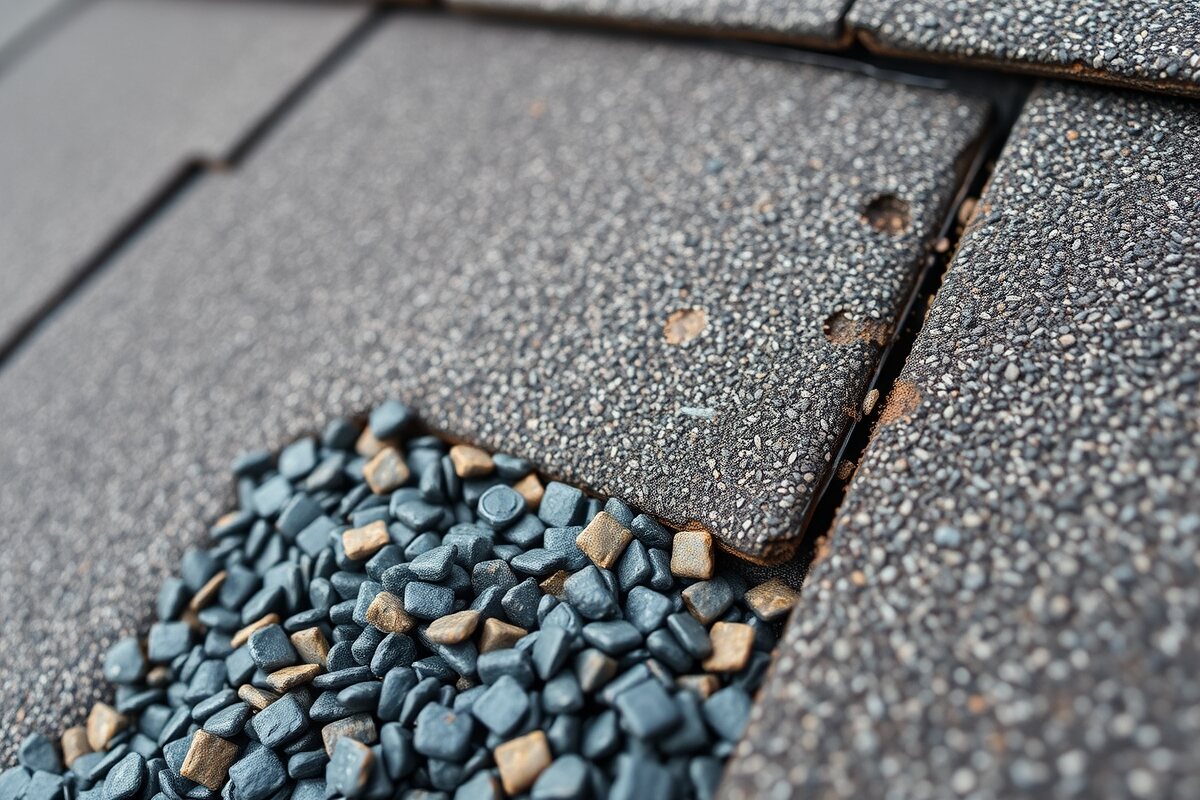
6. Cracked or Brittle Shingles
Grab a shingle edge (carefully) during a warm afternoon. If it snaps rather than flexes, the shingle has become brittle from age and thermal cycling. Cracked shingles let water wick underneath and are especially vulnerable to the next freeze.
7. Daylight or Water Stains in the Attic
Head into the attic on a bright day and look up. Daylight coming through the roof deck means there are gaps water can follow. Dark streaks or stains on the underside of the decking and rafters indicate active or past leaks. This is one of the fastest ways to catch trouble before it reaches your ceilings.
8. Water Stains on Ceilings or Walls
Brown rings on a bedroom ceiling or streaks running down an interior wall mean water has already made it through the roof system. The source is often higher up than the stain, so professional diagnosis matters. See our overview of roof leaks and their common origins.
9. Sagging Roof Deck or Ridge (Urgent)
A roofline that dips or a ridge that sways instead of running straight is a structural warning, not a cosmetic one. Sagging usually means the decking or framing has absorbed moisture and weakened. Treat this as urgent and get it inspected right away, because a saturated deck can eventually give way.
10. Moss and Algae Growth
Moss holds moisture directly against your shingles and lifts them as it grows, while the black streaks so common on shaded New England roofs are Gloeocapsa magma algae. Light algae is largely cosmetic, but thick moss on a north-facing, tree-shaded slope traps water through every freeze-thaw cycle and shortens shingle life considerably.
11. Damaged or Rusted Flashing
Flashing is the metal that seals the vulnerable transitions around chimneys, valleys, and skylights. Cracked caulk, lifted metal, or rust means these joints are no longer watertight, and flashing failures are behind a large share of the leaks we find. Read about flashing failure and how it lets water in.
Bonus Signals
Two quieter clues are worth watching. Rising energy bills can point to poor attic ventilation or heat escaping through a failing roof system. And if several neighbors in your same-age subdivision are re-roofing, that's a strong hint your home is on the same timeline, since houses built together tend to reach end of life together.
Repair or Replace? A Simple Rule of Thumb
Here is how we think about it honestly, and we will always tell you when a repair is the smarter spend:
- Repair when the damage is localized to one area, affects under roughly 30% of the roof, and the roof still has years of life left. A handful of storm-blown shingles or a single failed flashing joint on an otherwise sound 10-year-old roof is a repair.
- Replace when damage spans multiple slopes, exceeds roughly 30% of the roof, or the roof is near the end of its life. Once you're paying for repeated repairs on an aging roof, you're throwing good money after bad and delaying the inevitable.
An honest contractor should be willing to talk you out of a replacement you don't need. If your roof has years left and the damage is contained, a proper repair protects your home and your wallet.
Sign-by-Sign: Repair or Replace
Use this table as a starting point. The final call always depends on the roof's age, how many slopes are involved, and what an inspection reveals underneath.
| Sign | Typically Repair | Typically Replace |
|---|---|---|
| Roof age 20+ years | , | Plan replacement |
| A few missing shingles | Isolated storm damage | Widespread, repeat loss |
| Curling / clawing shingles | One small section | Across multiple slopes |
| Granules in gutters | Minor on newer roof | Heavy loss on old roof |
| Cracked / brittle shingles | A few shingles | Field-wide brittleness |
| Attic daylight or stains | Single small gap | Multiple leak points |
| Sagging deck or ridge | , | Structural, urgent |
| Moss & algae | Clean & treat | Under-shingle damage |
| Damaged flashing | Reseal one joint | Failure at many points |
What to Do Next
If you recognized two or three of these signs on your own roof, don't panic, but don't wait for the next storm either. A professional inspection will tell you exactly how much life is left and whether a repair or replacement makes more sense. For budgeting, our guide to roof replacement cost in MetroWest MA for 2026 breaks down what drives the price, and if you have some runway, learn about the best time of year to replace a roof in New England. When you're ready, our roofing services cover everything from targeted repairs to full replacements.
Frequently Asked Questions
How long does an asphalt shingle roof last in Massachusetts?
Most asphalt roofs last 15 to 30 years, but our freeze-thaw cycles, ice dams, and nor'easter winds push many MetroWest roofs toward the lower end of that range. Good attic ventilation and prompt repairs help you reach the upper end.
Can I just repair my roof instead of replacing it?
Often, yes. If the damage is localized, affects less than about 30% of the roof, and the roof still has years of life left, a repair is usually the smarter choice. We'll tell you honestly when that's the case.
Are black streaks on my roof a sign I need a new roof?
Not by themselves. Those streaks are Gloeocapsa magma algae and are largely cosmetic. Thick moss is more concerning because it traps moisture against the shingles. An inspection determines whether the shingles underneath have been compromised.
Is a sagging roof an emergency?
Treat it as urgent. A sagging deck or ridge points to weakened or moisture-saturated structure and should be inspected right away before it worsens.
Do you charge for an inspection?
No. Black Ladder Group provides a free written estimate after inspecting your roof, so you get a clear, no-pressure assessment of your options.
Not sure where your roof stands? Schedule a free roof inspection with Black Ladder Group and we'll give you an honest, written assessment for your Concord, Acton, Sudbury, or greater MetroWest home.

